Getting onto a roof through a hatch
HSE notes that many roofs carry plant, such as air conditioning or heating equipment, which people need to reach to look after it. It lists a roof access hatch among the usual ways up, alongside scaffolds, towers and ladders.
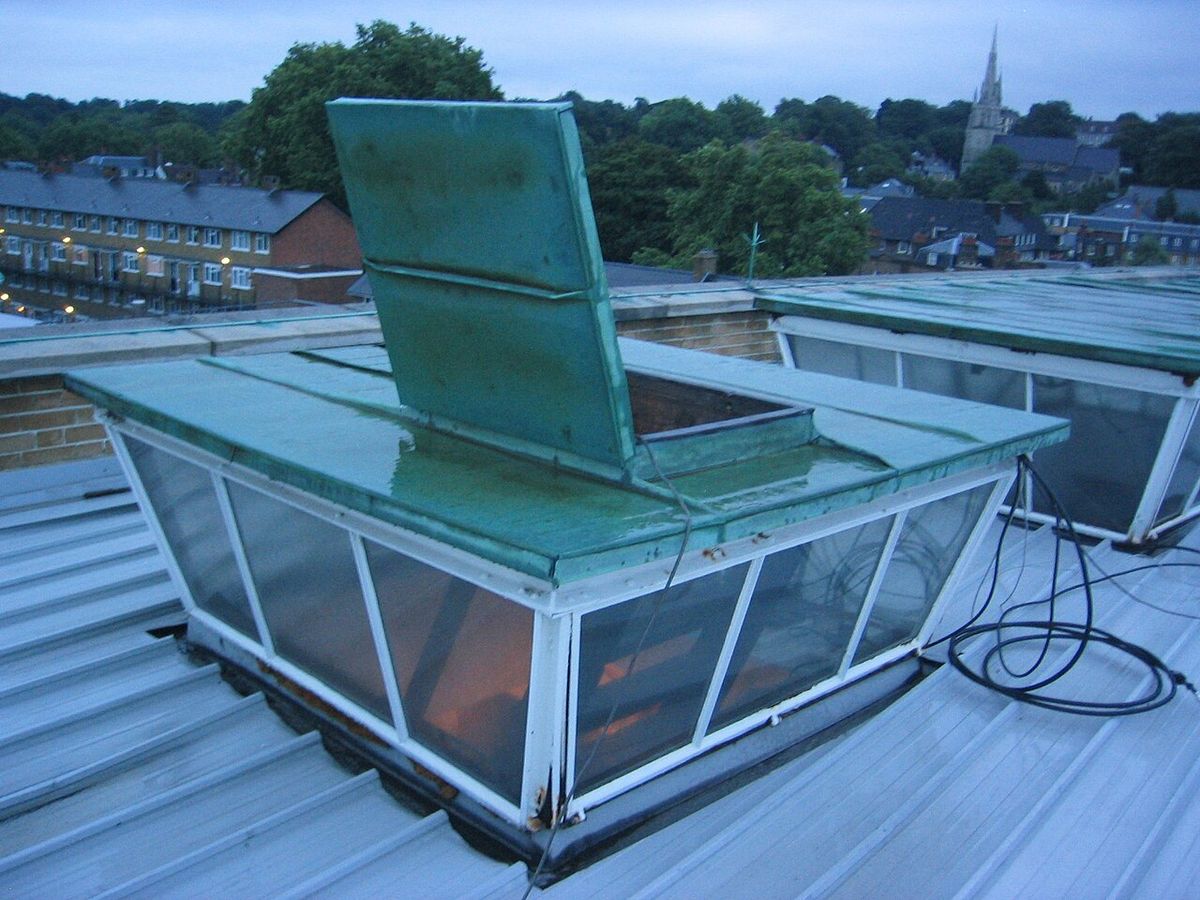
The first question is how often someone will need to go up.
How often someone goes up
HSE's guidance on roof work says that where people need to reach plant on a roof regularly, the building should have permanent safe routes and a safe place to work. Where they only go up now and then, a risk assessment should decide the safe way of working.
A hatch that is opened every week and one that is opened once a year can need very different arrangements around it.
The climb
HSE suggests asking some questions before anyone uses a ladder to reach a roof.
- Is a ladder the best equipment for this, or is there a safer way up?
- How long will someone be on it, and what will they be doing?
- Will they need to carry tools or materials?
- Can they keep three points of contact with the ladder?
A ladder used for access should be the right type, in good condition and secured so it cannot move. HSE says it should reach at least 1 metre above the level where people step off, so there is something to hold on to.
Ladders are not banned. HSE says they can be a sensible choice for low-risk tasks that take a short time.
Out on the roof
HSE says the main causes of death and injury in roof work are falls from roof edges and openings, and falls through fragile roofs and rooflights.
HSE says that on a flat roof, a secure double guard rail with a toe board around the edge can prevent falls. A strong parapet wall at least 950 millimetres high counts as permanent edge protection.
HSE asks for every roof to be treated as fragile until a competent person has confirmed it is not. Some rooflights are hard to see in certain light, and others are hidden by paint.
The hatch itself
An open hatch is itself a gap in the roof. HSE warns that falls through gaps, such as those left for smoke vents, are a common cause of serious injury and death. It says designers can help by removing openings or keeping their number down.
Rules in England and at work
In England, the building regulations guidance on protection from falling covers stairs and ladders that lead to areas used for maintenance in buildings other than homes. Where access is needed at least once a month, it points to stairs or ladders built like private stairs in a home or to the standard for industrial stairs and ladders. Where access is needed less often, portable ladders may be appropriate.
In a home, the same guidance allows a fixed ladder only for a loft conversion with one habitable room, where there is no space for a stair. It also says a retractable ladder should not be used as a way out in a fire.
Where roof work is done as work, the law says it has to be organised and planned so it is carried out safely. The people doing it have to be trained, competent and told what precautions to use.